Global First: T1200-Grade Ultra-High-Strength Carbon Fiber Enters Mass Production — China Hits 100-Ton Output Milestone, No Other Nation Has Scaled This Extreme-Performance Material
emer Published on Views: 171
If you track advanced materials, aerospace supply chains, or next-gen manufacturing competitiveness across the U.S. and global markets, this is a landmark announcement that demands your full attention: a new T1200-grade ultra-high-strength carbon fiber has launched worldwide, with China becoming the first and only country to deliver stable, 100-ton industrial-scale volume of this elite composite. This is not a lab-only prototype, a small-batch test run, or a speculative R&D milestone — this is full-scale, repeatable manufacturing for a material long seen as the “holy grail” of high-performance structural fibers.
For decades, the global carbon fiber market has been dominated by Japanese and Western producers (think Toray, Mitsubishi, Hexcel, and Cytec) across mainstream to high-end grades, from T300 up to T1100. T1200 stood as the uncommercialized peak: ultra-strong, ultra-light, and critical for next-generation aerospace, defense, high-end automotive, and advanced industrial systems — until now. Crossing the 100-ton production threshold proves this isn’t just a technical win; it’s a supply chain shift that will rewrite cost, availability, and competitive dynamics for the entire advanced composites ecosystem.
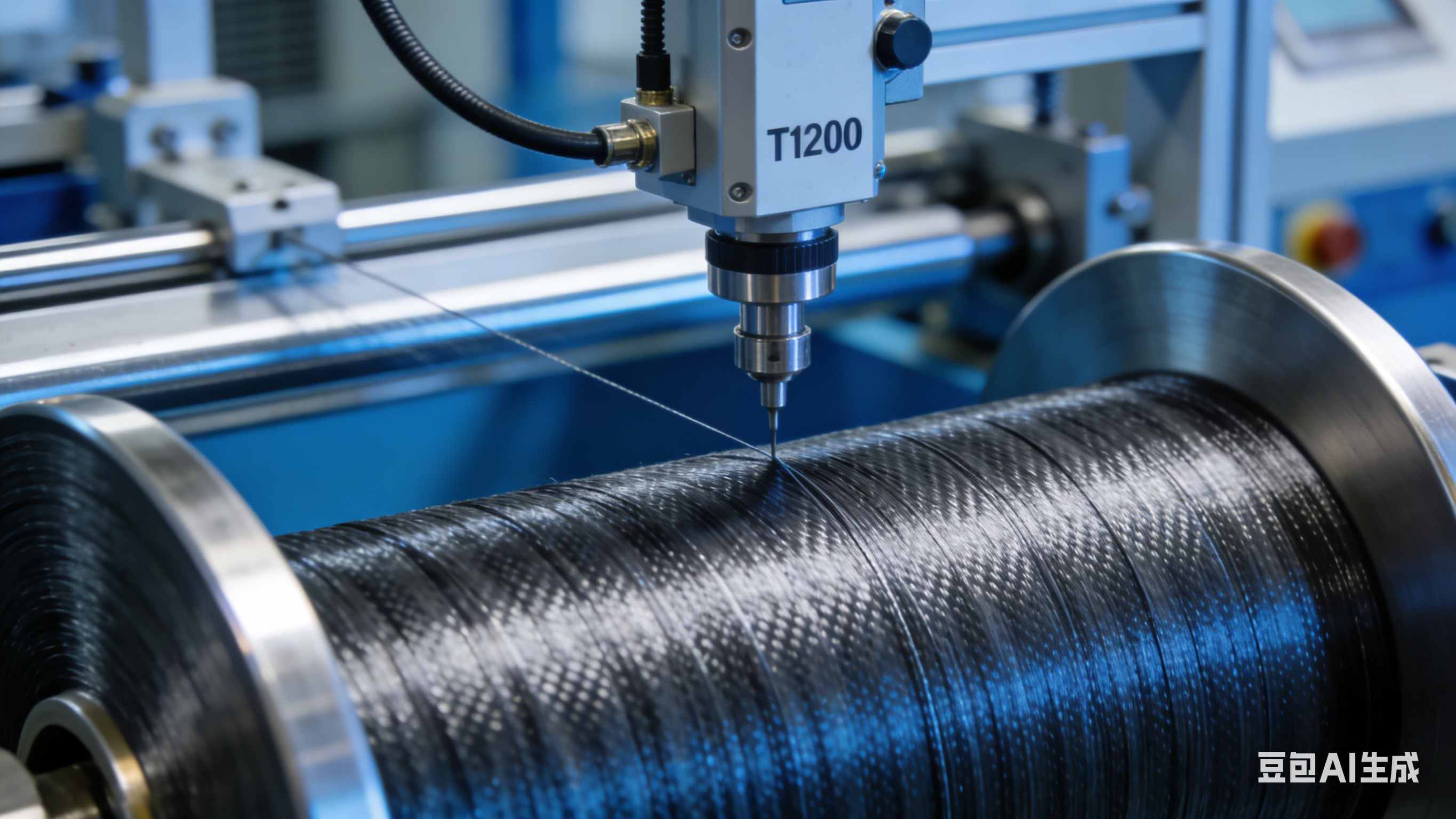
What Makes T1200 Carbon Fiber a Game-Changer (By the Numbers)
T1200 isn’t just a “stronger fiber” — it’s a generational leap in performance that unlocks design and efficiency gains no mainstream carbon fiber can match. Key specs confirm its elite standing:
-
Tensile strength over 8,000 MPa: Roughly 10x the strength of standard steel, while weighing just 1/4 the density — meaning extreme load-bearing capability with massive weight reduction.
-
14% stronger than the previous top-tier T1100 grade: A meaningful jump in performance for applications where every ounce of strength and every pound of weight matter.
-
Stable industrial output (100+ tons): No other country or producer has moved past lab-scale samples to consistent, large-batch manufacturing for T1200. Western and Japanese rivals remain stuck in development and low-volume testing, with no public timeline for mass production.
To put this in perspective: For U.S. aerospace contractors, defense manufacturers, and premium EV makers, access to T1200 means lighter airframes, longer range, higher fuel efficiency, and more durable structural components. Until this launch, that level of performance was either unavailable or prohibitively expensive for large-scale projects.
Why This Milestone Matters for U.S. Industry & Global Supply Chains
This isn’t just a materials science win — it’s a competitive inflection point that will ripple through American manufacturing, aerospace, and defense sectors for years to come.
- A Break in the Traditional Western-Japanese Supply Monopoly
For nearly 40 years, a small group of Japanese and U.S. producers controlled the entire high-end carbon fiber market, setting prices, controlling lead times, and limiting access to cutting-edge grades for strategic industries. The T1200 mass-production milestone introduces a reliable, large-scale alternative for global buyers, breaking that long-standing grip and forcing established players to accelerate their own R&D and scale-up plans.
- Cost & Availability Pressure for Next-Gen Programs
Ultra-high-strength carbon fiber has long been a “luxury material” — limited to small-scale, high-budget defense and space projects due to scarcity. With 100-ton annual output, T1200 moves from niche to accessible. For U.S. manufacturers, this creates two pressures:
•Cost downward pressure on existing high-grade carbon fiber (T700, T800, T1100) as buyers shift to the higher-performance T1200 at more attainable prices.
• Supply chain diversification urgency: Aerospace and defense OEMs will face growing pressure to qualify new fiber sources, reducing reliance on a small handful of traditional suppliers.
- Strategic Applications Now Within Reach
T1200’s unique strength-to-weight ratio makes it irreplaceable for high-stakes, cutting-edge sectors:
-
Commercial & military aerospace (lighter airframes, longer range, higher payload)
-
Advanced defense systems (ballistic protection, missile components, unmanned systems)
-
High-performance EVs & hypercars (chassis and structural weight reduction)
-
Space launch & satellite structures (extreme durability in low-earth orbit)
-
Industrial automation & robotics (rigid, lightweight arms for precision operations)
The Fine Print: Lab vs. Industrial Scale — Why 100 Tons Is a Big Deal
Let’s clear up a critical misconception: many companies can make T1200 in a lab. Western and Japanese materials firms have showcased small-batch T1200 samples for years, touting impressive lab strength numbers. But scaling to stable, repeatable, 100-ton industrial production requires mastering ultra-precise manufacturing, defect control at the sub-nanometer level, and consistent quality across full production runs — challenges that have stalled every other global player.
This milestone isn’t just about making a stronger fiber; it’s about proving that a previously unproducible material can be manufactured reliably and in volume. For procurement and engineering teams across the U.S., that means T1200 can now be specified in long-term product roadmaps, not just one-off prototypes.
What’s Next for the Global Carbon Fiber Landscape?
Expect rapid ripple effects across the industry in the next 12–24 months:
• Traditional leaders (Toray, Hexcel, etc.) will accelerate their T1200 scale-up efforts to protect market share, likely announcing accelerated production timelines.
• U.S. aerospace and defense contractors will begin dual-source qualification processes to add this new T1200 supply to their approved vendor lists.
• Price compression will hit the entire high-strength carbon fiber market, making elite performance more accessible for mid-tier projects that previously couldn’t afford it.
• Global competition in advanced composites will shift from pure R&D to scalable, cost-effective industrial production — a space where this new mass-production capability now holds a clear lead.
Key Takeaway for U.S. Manufacturers: This is not a “distant industry update” — it’s a supply chain and competitive shift that will impact product design, cost structures, and program timelines starting now. If your team works in aerospace, defense, high-performance automotive, or advanced robotics, T1200’s mass arrival should be on your immediate roadmap for material evaluation and supplier diversification.
In the world of advanced materials, true “game-changing” milestones are rare. The first-ever industrial-scale, 100-ton+ production of T1200 ultra-high-strength carbon fiber is exactly that: a moment that redefines what’s possible, reshapes global supply chains, and sets a new bar for the entire composites industry.
For U.S. manufacturers and supply chain leaders, the message is clear: The era of limited, exclusive access to top-tier ultra-high-strength carbon fiber is over. Adapt, diversify, and prepare for a more competitive — and more capable — advanced manufacturing landscape.